 HYBO Energy
China’s commercial buildings are entering a stricter energy-performance era. Energy Efficiency For Commercial Projects now depends on measured operation, not attractive product brochures. The opportunity is substantial. The UNEP Global Status Report for Buildings and Construction 2023 reported that buildings and construction consumed about 30% of global final energy and produced approximately 26% of energy-related emissions. These figures make efficiency equipment a business priority, not merely an environmental preference.
This introduction presents ten energy-efficiency products widely considered for offices, hotels, factories, hospitals, and retail facilities in China. The selection includes high-efficiency chillers, heat pumps, variable-frequency drives, LED lighting, building management systems, smart meters, low-emissivity glass, advanced insulation, energy-recovery ventilation, and rooftop solar systems. Each product can reduce waste in a specific place, such as an overloaded air-conditioning plant or lights burning through an empty corridor. The International Energy Agency’s Energy Efficiency 2023 report identifies efficient equipment, digital controls, and electrification as important tools for reducing energy demand. China’s national energy strategy also emphasizes lower energy intensity and cleaner building operations.
Still, “top ten” is not universal. Climate zones, operating schedules, electricity tariffs, and maintenance quality change the result. A premium chiller may disappoint if cooling towers remain dirty. A smart meter may collect data without improving decisions. That matters. Product claims require independent testing, lifecycle costing, and site-level verification. This guide therefore considers efficiency ratings, installation experience, control compatibility, service support, and realistic payback periods. Some conclusions remain debatable, but transparent limitations are more reliable than perfect-looking rankings.
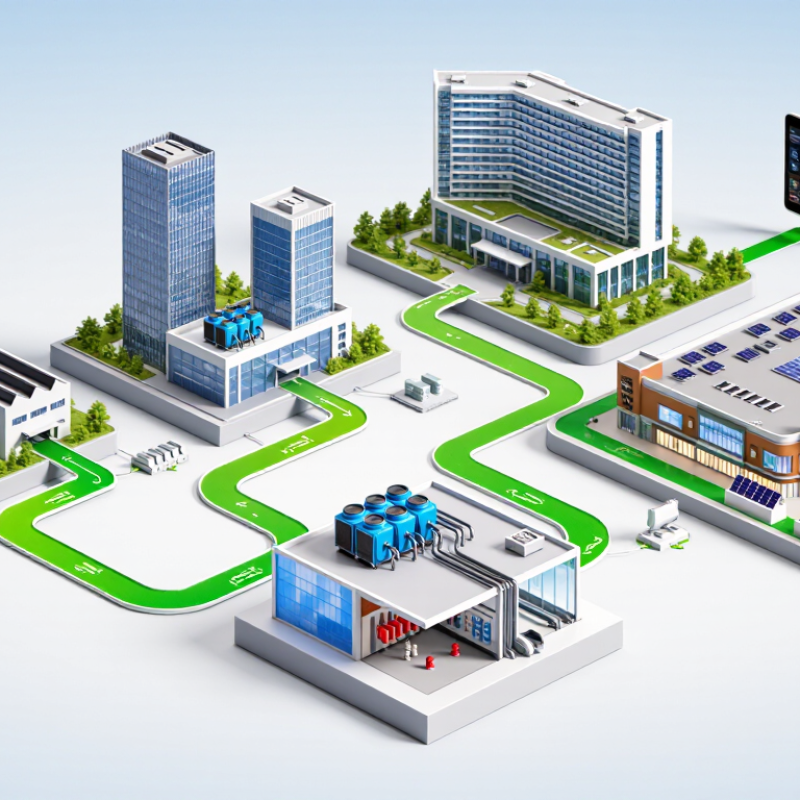
Commercial energy efficiency products in China are not simply low-wattage devices. They must reduce energy use under real operating loads. A practical top-ten shortlist may include variable-speed drives, high-efficiency motors, LED systems, heat pumps, efficient chillers, smart meters, building controls, refrigeration equipment, transformers, and solar-integrated systems. Their value depends on verified output, operating schedules, maintenance, and compatibility with local voltage, climate, and building use. In practice, a showroom rating can mislead when equipment runs continuously in a busy hotel or factory.
Professional evaluation combines measured performance with relevant Chinese standards, certification records, and China Energy Label information where applicable. Buyers should review efficiency curves, seasonal performance, noise levels, standby consumption, and expected service life. Third-party testing can strengthen confidence, especially for large cooling, heating, and motor systems. Installation quality matters too. Poor controls or blocked air filters can erase promised savings within months. Reliable suppliers should provide clear manuals, spare-part access, calibration support, and transparent warranty terms.
There is no perfect product. A highly efficient chiller may require skilled maintenance and higher investment. A smart control system may save energy, yet produce weak results when staff ignore its settings. That limitation deserves attention. Energy savings should be measured after installation, not assumed from a specification sheet. Monthly meter readings, operating records, and maintenance reports reveal whether the equipment performs as promised. Even careful assessments can miss seasonal changes, which makes long-term monitoring necessary.
| Rank | Product Category | Typical Commercial Application | Key Efficiency Indicator | Relevant China Standard or Framework | Indicative Energy Saving | What Defines an Efficient Product |
|---|---|---|---|---|---|---|
| 1 | LED Commercial Lighting | Offices, retail stores, warehouses, factories, hotels, and public buildings | System efficacy, commonly measured in lumens per watt (lm/W); useful life and power factor are also important | GB 30255, covering minimum allowable values and energy-efficiency grades for LED products | Approximately 30%–60% versus older fluorescent or high-intensity-discharge lighting, depending on controls and operating hours | High efficacy, low standby power, good thermal management, suitable color quality, and lighting controls |
| 2 | High-Efficiency Variable-Speed HVAC Systems | Office buildings, shopping centers, hotels, hospitals, and mixed-use facilities | Seasonal energy-efficiency ratio, coefficient of performance, integrated part-load value, and annual energy performance | Applicable air-conditioner and heat-pump energy-efficiency standards, including GB 21454 where applicable | Approximately 15%–35% compared with fixed-speed systems of similar capacity | Variable-speed compressors, efficient heat exchangers, optimized controls, and strong part-load performance |
| 3 | High-Efficiency Water Chillers | Central cooling plants serving large commercial and institutional buildings | Coefficient of performance and integrated part-load value, usually expressed as kW of electricity per refrigeration ton | GB 19576, which sets minimum allowable values and energy-efficiency grades for water chillers | Approximately 10%–30% for the chiller plant when replacing older equipment and optimizing load control | Efficient compressors, variable-speed drives, optimized condenser-water temperatures, and effective sequencing |
| 4 | Premium-Efficiency Electric Motors | Pumps, fans, compressors, conveyors, cooling towers, and production machinery | Motor efficiency percentage at rated load, with attention to efficiency at partial load | GB 18613 for minimum allowable values and energy-efficiency grades of three-phase asynchronous motors | Approximately 2%–8% motor electricity reduction; greater savings may result when combined with load control | Low electrical and mechanical losses, correct sizing, high efficiency across the operating range, and reliable thermal performance |
| 5 | Variable-Frequency Drives | HVAC fans, pumps, air-handling units, water systems, and process equipment | Drive efficiency, motor-system efficiency, speed range, harmonic performance, and control accuracy | GB/T 12668 series and applicable requirements for adjustable-speed electrical power-drive systems | Approximately 20%–50% for variable-torque fan and pump applications compared with throttling or damper control | Efficient power conversion, automatic speed control, low standby losses, and compatibility with the motor and load profile |
| 6 | Energy-Efficient Air-Source Heat Pumps | Space heating, domestic hot water, hotels, schools, offices, and industrial support facilities | Coefficient of performance for heating and seasonal performance under local climate conditions | Applicable national energy-efficiency standards for heat-pump water heaters and air-conditioning equipment | Approximately 30%–60% versus electric resistance heating, subject to climate and hot-water temperature | High seasonal COP, variable-speed operation, low-temperature capability, heat recovery, and effective defrost control |
| 7 | High-Efficiency Distribution Transformers | Commercial building substations, industrial facilities, data centers, and infrastructure projects | No-load loss, load loss, total loss, and transformer efficiency at the expected load profile | GB 20052 and related requirements for minimum allowable energy-efficiency values of transformers | Approximately 10%–30% reduction in transformer losses compared with older units, depending on loading and age | Low core loss, low winding loss, appropriate capacity selection, and verified performance at actual operating loads |
| 8 | Building Energy Management and Control Systems | Large offices, campuses, shopping centers, hospitals, hotels, and industrial parks | Metering coverage, control accuracy, demand response capability, fault detection, and verified energy performance | Building energy-management practices aligned with China’s green-building and public-building energy-monitoring frameworks | Approximately 5%–15% through scheduling, set-point optimization, fault detection, and operational improvements | Accurate sub-metering, interoperable controls, automated optimization, actionable alarms, and measurable baseline comparison |
| 9 | Low-Emissivity Commercial Glazing | Curtain walls, office façades, hotels, retail buildings, and high-performance renovations | U-value, solar heat-gain coefficient, visible transmittance, air leakage, and thermal-edge performance | GB/T 8484 for thermal transmittance and GB/T 2680 for optical and solar-radiation properties of building glass | Approximately 10%–25% reduction in building cooling and heating loads compared with basic single glazing | Low thermal transmittance, controlled solar gain, suitable visible-light transmission, and correctly designed frames and seals |
| 10 | Commercial Refrigeration Equipment | Supermarkets, convenience stores, cold rooms, restaurants, food-service facilities, and logistics centers | Daily electricity consumption, refrigeration COP, cabinet heat leakage, temperature stability, and defrost performance | Applicable China energy-efficiency requirements for commercial refrigeration appliances and refrigeration systems | Approximately 15%–35% compared with older refrigeration systems, depending on cabinet type and operating conditions | Efficient compressors, electronically commutated fans, high-quality insulation, airtight doors, adaptive defrost, and heat recovery |
Note: Indicative savings ranges are typical project estimates rather than guaranteed results. Actual performance depends on climate, operating hours, equipment sizing, maintenance, control strategy, occupancy, and the efficiency of the existing system. In China, energy-efficiency grades generally use Grade 1 to indicate the highest efficiency level within the applicable product standard.
It reduces energy use during real operating conditions. Low wattage alone is not enough. Think busy hotels, factories, and offices.
Common options include LED lighting, efficient motors, variable-speed drives, heat pumps, chillers, smart meters, and building controls. Solar water heaters and battery storage may also help.
Review measured output, efficiency curves, seasonal performance, noise, standby use, and expected service life. Certification records and applicable energy labels can support the review.
Poor wiring, blocked filters, or weak control settings can erase savings within months. A badly placed occupancy sensor may leave an aisle dark.
They should record capacity, operating hours, temperature settings, and electrical loads. HVAC checks should include airflow, refrigerant conditions, filter resistance, and control sequences.
Compare monthly kilowatt-hours per square meter, peak demand, indoor temperature, and maintenance costs. Use at least three months of data when possible. Longer monitoring is better.
No. Controls may save energy when staff follow the settings. If employees override them, results can weaken. This limitation is easy to overlook.
A showroom rating may not match continuous operation in a crowded building. Payback estimates can also be wrong. Review meter readings, staff feedback, and seasonal changes honestly.
China’s commercial energy efficiency market covers a wide range of products designed to reduce energy consumption, operating costs, and environmental impact without compromising business performance. Common categories include high-efficiency lighting, intelligent control systems, energy-saving HVAC equipment, efficient motors, variable-frequency drives, smart metering devices, building insulation solutions, heat recovery systems, and renewable energy support equipment. These solutions help commercial facilities optimize electricity use, reduce peak demand, improve indoor comfort, and monitor energy performance more accurately.
For buyers, selecting suitable Energy Efficiency For Commercial Projects requires careful evaluation of energy ratings, compatibility, expected service life, maintenance needs, safety standards, and total ownership cost. Proper installation and commissioning are essential to achieving the promised results. After deployment, businesses should track consumption data, compare actual performance with baseline usage, and conduct regular inspections. A structured evaluation process allows commercial users to identify savings opportunities, verify efficiency improvements, and continually refine their energy management strategies.
