 HYBO Energy
Choosing Energy Saving Technologies For Future Living is not a matter of buying the newest device. It requires practical judgment, reliable evidence, and a clear understanding of your home.
A highly efficient heat pump may reduce winter energy use, but poor insulation can weaken its performance. A smart thermostat may help, yet incorrect settings can create unnecessary heating cycles. Even small details matter. A cold window. A glowing standby light. An oversized water heater.
Energy efficiency expert Amory Lovins, co-founder of Rocky Mountain Institute, has said, “The cheapest energy is the energy you don’t use.” This principle remains useful when comparing future technologies. Begin with the building envelope, then examine heating, cooling, lighting, appliances, and controls. Check measured performance, not only advertising claims. Look for independent certifications, transparent energy data, repair options, and qualified installation.
Local climate also changes the answer. Solar panels may perform differently under seasonal cloud cover. Battery storage may offer resilience, but its cost and material footprint deserve attention. A technology can save electricity while creating other environmental pressures. That uncomfortable trade-off should not be ignored.
This guide will explore how to compare Energy Saving Technologies For Future Living through efficiency, lifetime cost, durability, and user experience. It will consider real household behavior, because people sometimes leave systems on or misunderstand automated controls. Perfect predictions are impossible. Still, careful measurement can expose weak assumptions.
The best choice is rarely the most fashionable one. It is the solution that performs consistently, remains maintainable, and fits the people using it.
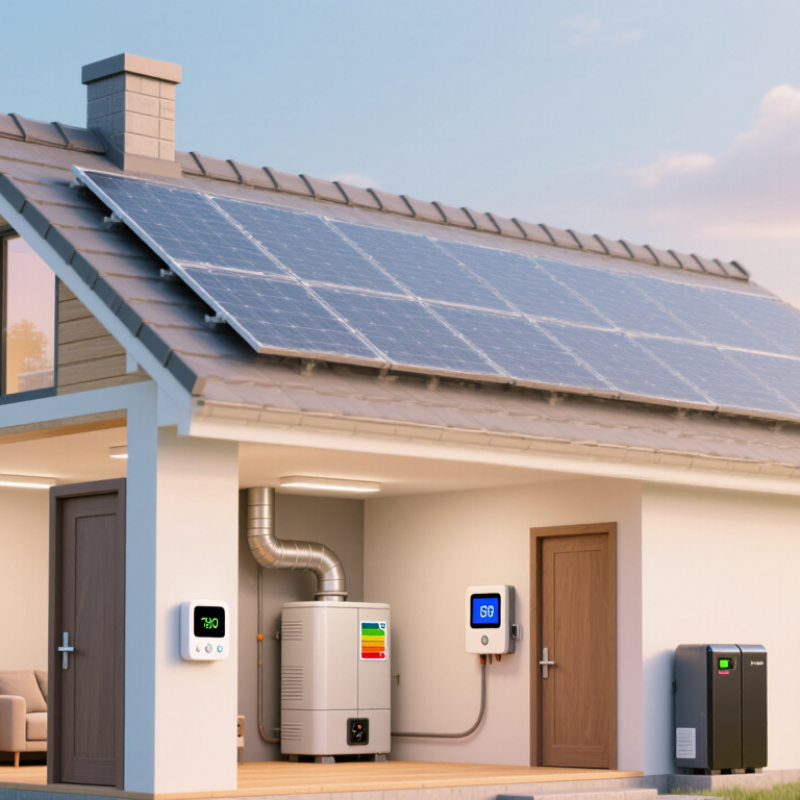
Energy-saving technologies are practical systems that deliver the same comfort with less electricity, fuel, or water. Their purpose is not simply to reduce consumption. They should also support safety, affordability, and healthy indoor conditions. Examples include high-efficiency insulation, heat pumps, smart lighting controls, solar storage, and water-saving fixtures. A technology becomes genuinely useful when its performance is measurable in daily life.
In future homes, these systems may work together through sensors and automated controls. A room sensor can lower heating when nobody is present. A smart meter can reveal that evening cooking creates the highest demand. In a well-insulated apartment, sealed windows may reduce drafts more effectively than a larger heater. Small changes matter. However, automation can waste energy when settings are poorly designed or devices run continuously. Convenience is not always efficiency.
Reliable choices require evidence from energy audits, independent testing, and recognized safety standards. Compare installation costs, maintenance needs, expected lifespan, and performance in the local climate. A short household trial can expose problems that product data misses. My early estimate of savings would have been too optimistic without measuring standby power. That is an uncomfortable lesson. Future living should therefore combine digital control with human attention, because real households change their habits, schedules, and expectations.
| Technology | Primary Energy-Saving Role | Typical Energy Reduction | Typical Service Life | Typical Simple Payback | Best-Fit Living Situation | Key Selection Considerations |
|---|---|---|---|---|---|---|
| Building insulation and air sealing | Reduces heat transfer and uncontrolled air leakage through walls, roofs, floors, windows, doors, and joints. | 15–35% heating and cooling savings | 25–50 years, depending on materials and moisture control | 3–12 years | New construction and major renovations, especially in extreme climates | Prioritize a whole-building assessment, moisture management, airtightness testing, and climate-appropriate insulation levels. |
| High-performance windows | Limits conductive heat loss, solar heat gain, drafts, and condensation. | 10–25% heating and cooling savings | 20–35 years | 8–20 years | Homes with single-pane, damaged, or poorly fitted windows | Compare U-factor, solar heat-gain coefficient, visible transmittance, airtightness, orientation, shading, and installation quality. |
| Heat pump heating and cooling | Transfers heat instead of producing it directly, providing heating, cooling, and sometimes water heating. | 30–60% heating energy savings | 12–20 years | 5–15 years | Homes using electric resistance, oil, or older combustion-based heating | Check seasonal efficiency, cold-weather capacity, sound level, backup heat, refrigerant requirements, and electricity prices. |
| Heat-recovery ventilation | Provides fresh air while recovering heat or cooling from exhaust air, reducing ventilation losses. | 10–25% ventilation-related heating and cooling savings | 10–20 years | 7–18 years | Airtight homes, cold or hot climates, and households needing improved indoor air quality | Evaluate heat-recovery efficiency, airflow rate, filtration, frost protection, noise, duct design, and filter replacement needs. |
| Smart thermostats and zoning controls | Adjusts temperature schedules and room-level conditions according to occupancy, weather, and user preferences. | 8–15% heating and cooling savings | 5–10 years | 1–5 years | Homes with regular occupancy changes or multiple thermal zones | Confirm equipment compatibility, sensor accuracy, cybersecurity, manual override options, and ease of use. |
| LED lighting with occupancy and daylight controls | Uses efficient light sources and automatically reduces lighting when rooms are empty or daylight is sufficient. | 50–80% lighting electricity savings | 10–20 years at typical household use | 1–4 years | All homes, particularly spaces with long operating hours | Select suitable color temperature, high color-rendering quality, dimming compatibility, sensor placement, and low standby power. |
| Solar water heating | Uses solar energy to preheat or supply domestic hot water, reducing fuel or electricity demand. | 40–70% hot-water energy savings | 15–25 years | 6–15 years | Sunny locations with high hot-water demand and suitable roof orientation | Assess solar resource, roof structure, freeze protection, backup heating, storage capacity, and maintenance access. |
| Rooftop solar photovoltaics | Generates electricity on-site, reducing grid electricity purchases and operational emissions. | 20–60% annual grid-electricity reduction | 25–35 years for modules; shorter for power electronics | 7–15 years | Homes with adequate roof area, good solar exposure, and long-term occupancy | Review shading, roof condition, orientation, local incentives, export rules, inverter replacement, and future electricity demand. |
| Home battery storage | Stores electricity for later use, improves solar self-consumption, and can provide limited backup power. | 10–30% additional grid-electricity reduction when paired with solar | 10–15 years or a specified cycle limit | 8–15 years, highly tariff-dependent | Homes with time-of-use pricing, solar generation, or reliability concerns | Compare usable capacity, round-trip efficiency, power output, safety certification, warranty terms, and end-of-life recycling. |
| Efficient heat-pump water heater | Extracts heat from surrounding air to heat water more efficiently than conventional electric resistance systems. | 50–70% water-heating electricity savings | 10–15 years | 3–8 years | Households replacing electric-resistance water heaters | Check tank size, recovery rate, ambient temperature range, condensate drainage, noise, and installation space. |
| Energy monitoring and home energy management | Measures consumption and coordinates appliances, heating, cooling, storage, and renewable generation. | 5–15% whole-home electricity savings | 5–10 years | 2–7 years | Homes with high electricity use, solar generation, or flexible loads | Require accurate measurement, interoperable controls, data privacy, clear alerts, and useful automation rather than complex dashboards alone. |
They provide similar comfort using less electricity, fuel, or water. Examples include insulation, heat pumps, smart lighting, and efficient fixtures. Performance should be measurable at home.
Room sensors can lower heating when nobody is present. Smart meters can reveal high-demand periods, such as evening cooking. Automation is not always efficient.
Check electrical capacity, roof direction, insulation, plumbing, wiring, and available space. An efficient device may perform poorly in an unsuitable building.
Record electricity use for twelve months. Note room temperatures and peak-hour habits. Inspect window frames, roof spaces, and drafts on windy days.
Ask about filters, batteries, seals, software, inspections, and replacement parts. Keep repair records and energy readings. A neglected filter can increase consumption.
Request documented testing, secure connections, proper ventilation, and emergency shutoffs. Follow local building requirements. Children, pets, moisture, and heat can expose weaknesses.
Adopt one practical measure first. Monitor consumption, comfort, and service calls for eight to twelve weeks. A small pilot can reveal wiring limits.
Compare installation, maintenance, repairs, lifespan, and local climate performance. Do not trust impressive percentages without baseline data. My early estimates were too optimistic.
Check whether it can accept additional storage, sensors, or renewable inputs. Modular designs offer flexibility, but they may cost more initially.
Include everyone using the system, especially older residents and tenants. Clear controls often outperform complicated features. Some plans need revision. That is normal.
Energy Saving Technologies For Future Living are practical solutions designed to reduce energy consumption, lower household costs, and support a more sustainable lifestyle. Choosing the right technology begins with understanding a home’s energy use, including heating, cooling, lighting, appliances, and transportation needs. Homeowners should then set clear efficiency goals based on budget, comfort, property size, and environmental priorities.
A thoughtful comparison should consider performance, installation and operating costs, expected energy savings, environmental impact, and suitability for the local climate. Compatibility with existing systems, maintenance requirements, safety standards, and future expansion are equally important. A practical adoption plan can begin with an energy assessment, followed by prioritizing affordable improvements with measurable benefits. Over time, households can combine efficient equipment, smart controls, renewable energy options, and better insulation to create a flexible and resilient energy system. By evaluating both immediate advantages and long-term scalability, families can make informed choices that improve comfort while supporting responsible resource use.
