 HYBO Energy
HYBO Energy
HYBO Energy
Deploying high-reliability sub-station controllers, drone security, and high-cycle storage solutions targeting utility resilience in Southeast Queensland.
Brisbane, and the broader Queensland region, is undergoing an unprecedented electrical grid transformation. As Australia accelerates toward its net-zero emission mandates, Southeast Queensland has emerged as one of the world's most dense concentrations of rooftop solar photovoltaics (PV). However, this rapid injection of variable distributed energy resources (DERs) has placed immense stress on regional low-voltage distribution networks managed by operators like Energex. The notorious "duck curve" has transitioned from a future projection to a daily operational reality, causing voltage fluctuations, grid instabilities, and reverse power flows.
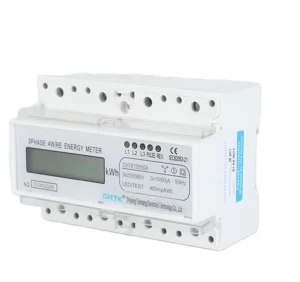
Local industrial parks from Yatala to Eagle Farm, alongside commercial developments in the Brisbane CBD, require robust smart grid exporters capable of delivering technologies that harmonize site-level operations with distribution network obligations. System integration in Queensland is no longer just about generating clean energy—it is about intelligent grid synchronization. The demand for sub-station control devices, advanced metering systems (DCU), broadband-over-powerline (BPL) backhaul communications, and highly resilient Battery Energy Storage Systems (BESS) has surged exponentially.
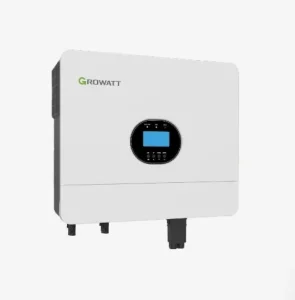
Rapid commercial electrification across Brisbane Port and airport precincts has increased peak load variability. Smart exporting entities must comply with national AS/NZS 4777.2 inverter standards and state-specific utility frameworks to prevent phase imbalances and localized voltage excursions.
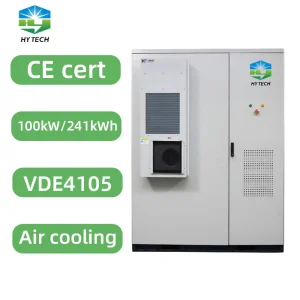
By networking decentralized energy storage, Brisbane industries can participate in frequency control ancillary services (FCAS). HYBO Energy's system design is optimized to match Australian Energy Market Operator (AEMO) requirements, transforming simple battery banks into reactive grid-stabilizing virtual assets.
Decentralization, Decarbonization, and Digitization are driving the international procurement of advanced substation and storage hardware.
Globally, smart grid exporters are shifting away from standalone products toward highly integrated ecosystems. High-speed communication overlays, predictive maintenance infrastructure, and thermal management compounds are replacing isolated electrical gear. Major manufacturing centers are shipping grid elements globally to address rapid grid modernizations in Europe, North America, and Oceania.
Australia presents a unique testing ground: extreme ambient temperatures, vast distances, and highly sophisticated smart grid mandates. For an international manufacturer to successfully export to Brisbane, products must not only withstand the sub-tropical heat of Queensland but also offer state-of-the-art telemetry interface capabilities, conforming to strict local communication standards like Modbus, DNP3, and IEC 61850. Compliance with the Clean Energy Council (CEC) guidelines is essential to unlocking regional rebates and utility authorizations.
Next-generation electrical grid deployment requires materials and communications designed for thermal extremes. From low-voltage Broadband over Powerline (BPL) backplane links to phase-change composite materials, HYBO New Energy designs systems with structural longevity in mind.
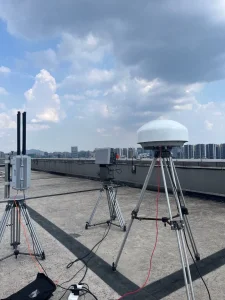
By injecting high-frequency carrier signals onto existing utility power cables, BPL modules bypass costly fiber optic trenching. They enable high-definition telemetry collection directly from smart meters and solar nodes back to regional substations in Brisbane, establishing real-time network visibility.
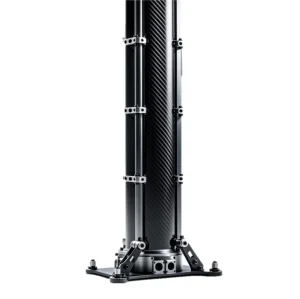
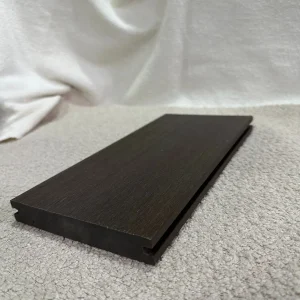
Outdoor energy kiosks are highly susceptible to solar load. Our Thermomatrix WPC core acts as an insulating phase-change barrier, absorbing latent heat during peak daylight hours and releasing it safely at night, protecting delicate power electronics from thermal stress.
Discover our globally tested smart grid systems, inverters, meters, and thermal stabilization products.
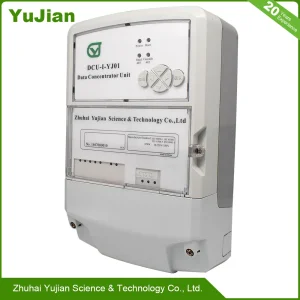
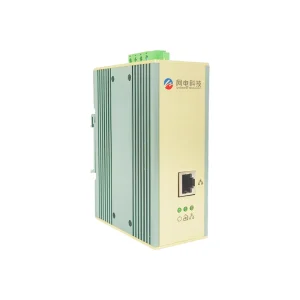
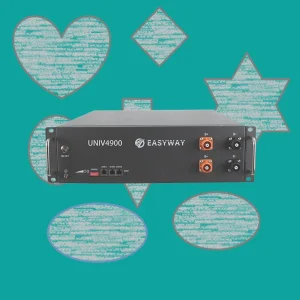
Changzhou HYBO New Energy Co., Ltd. specializes in the production, design, manufacturing, and sales of lithium battery energy storage products. Starting from household energy storage, we have systematically expanded our technological footprint to cover small industry, commerce, and portable energy storage solutions.
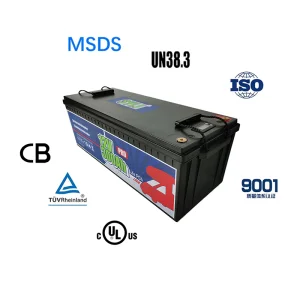
Relying on our company's proprietary, advanced Battery Management System (BMS) and self-developed patented technologies, HYBO products have successfully passed rigorous international certifications, including TUV, IEC, and CEC, ensuring they meet the high performance, safety, and regulatory benchmarks required by Australian networks.
Our solutions have been deployed successfully across the European Union, the United Kingdom, South Africa, Southeast Asia, East Asia, the Middle East, New Zealand, and Australia. By providing reliable, locally compliant hardware, we bring satisfactory energy storage experiences to grids worldwide.

Deployable applications of portable power and stationary battery networks across industrial, residential, and field environments.
Designed for installation & maintenance crews, remote site extractions, agricultural pumps, gardening, transport hubs, and remote media operations. Provides uninterrupted energy where conventional grids fail or are yet to be established.
Ensures domestic continuity during severe storm outages in Queensland. Keeps refrigeration, medical equipment, communication networks, and localized water pumps active until central services are restored.
Supports camping, hiking, RV life, overlanding, tailgating, and outdoor gatherings, offering clean, quiet, emission-free electricity far away from physical utility grids.
Prior to purchasing a portable power station or small commercial energy storage asset, analyze your cumulative load profile. Calculate the total continuous running watts and surge current of the connected equipment. Assess expected solar charging yields (based on local Brisbane irradiance statistics) and determine the required battery capacity buffer. Our sales engineering team can assist you in calculating sizing metrics, output interfaces, and solar array configurations to maximize off-grid autarky.
In-depth answers concerning grid compliance, communication standards, and battery chemistry performance.
Our smart grid energy storage products and inverters comply with AS/NZS 4777.2:2020 standards, which govern grid-connected inverter requirements in Australia. Additionally, they are CEC (Clean Energy Council) listed, ensuring full eligibility for installation across Queensland networks managed by Energex and Ergon. They also hold international safety certifications including IEC 62619, TUV, and UN38.3 for lithium cell safety.
BPL utilizes existing physical copper or aluminum power distribution wires to transmit high-frequency digital signals. This eliminates the need to dig trenches or pull dedicated Ethernet or fiber cables to connect meters, sensors, and remote terminal units (RTUs). For utility networks in mature suburban areas of Brisbane, this significantly reduces grid digitization costs.
A high cycle count (6000 cycles at 80% Depth of Discharge) guarantees long-term return on investment (ROI). In areas with high solar exposure like Queensland, batteries cycle daily, storing peak solar and discharging it during peak demand hours. A 6000-cycle rating translates to approximately 15+ years of daily usage before nominal capacity degrades to 80% of its original state.
While standard lithium batteries suffer from lithium plating when charged below 0°C, our low-temperature LiFePO4 chemistry integrates an internal heating element and specialized BMS logic. When charging current is detected, the BMS first routes power to heat the cells to safe levels before initiating current injection, protecting the battery's structural health.
The Thermomatrix composite is engineered with phase-change micro-capsules embedded in its wood-plastic structure. At peak temperatures, these capsules absorb latent heat, melting internally to buffer thermal transfers. As temperature drops, they solidify, releasing heat. This micro-climate regulation minimizes the demand on HVAC systems cooling electrical enclosures.
Get in touch with HYBO New Energy's technical export specialists. We provide system design support, compliance documentation, and complete logistics management for Southeast Queensland developments.
Send Inquiry Now